
At a glance
- Deer, elk, moose and caribou drop their antlers every year, and finding them is called shed hunting.
- Most deer shed in late winter and early spring. Roe deer are the exception and shed in early winter.
- Search winter feeding areas, bedding cover and the trails between them, just after the snow melts.
- Logging every find in an app like Antlerstack shows you where and when to look next season.
- Always get permission and check the local rules before you collect.
What is shed hunting?
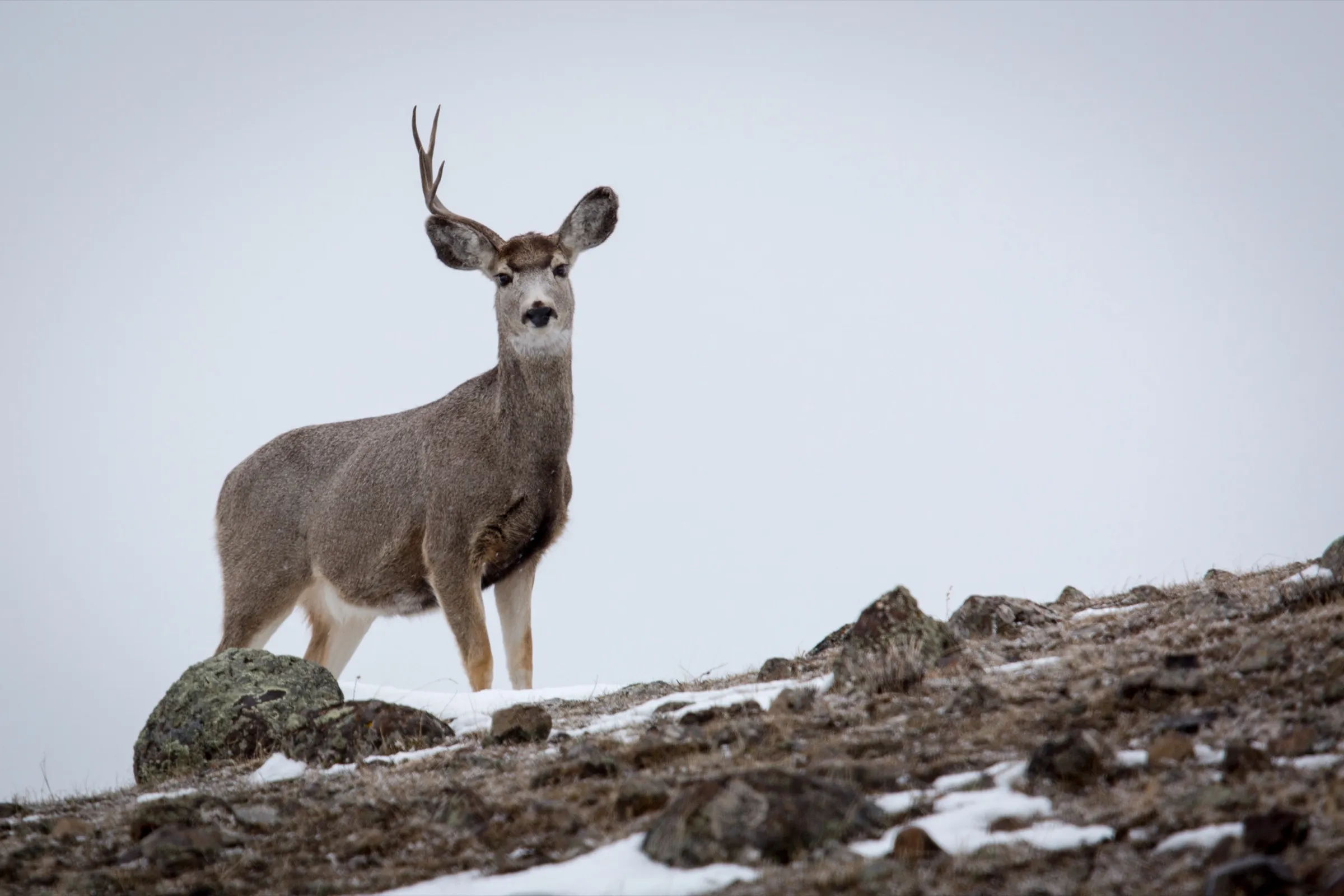
Shed hunting is searching the countryside for antlers that deer have naturally dropped. Every year, male deer, elk, moose and caribou grow a new set of antlers, carry them through the breeding season, and then cast them. The cast antlers, called sheds, lie where they fall until someone finds them or the weather and wildlife break them down.
Antlers vs horns
Antlers are not horns. Horns, on cattle, sheep and goats, grow throughout an animal’s life and are never shed. Antlers are bone, regrown from scratch every year. After the rut, a buck’s testosterone falls, the bond at the base of each antler weakens, and the antlers drop off. The two sides often fall a day or two apart, which is why a single shed is far more common than a matched pair. A new set starts growing in spring, covered in velvet, and hardens by late summer.
Why people shed hunt
People shed hunt because it is a reason to be outdoors in late winter, when there is little else to hunt, and because each find says something about the deer on that ground: which bucks survived the season, how big they are, and where they spend the winter. Many hunters also use sheds to learn the land before the next season. Collectors keep them, crafters turn them into knife handles and furniture, and the rarest find of all is a matched set: both sides from the same deer.
What you need to start
In most places you need no licence and no special kit to start: good boots, a backpack, binoculars, and permission to be on the land.
How to find shed antlers
- Use a shed hunting app like Antlerstack to learn your ground. Log every antler where you find it, and over a few seasons your finds build into a private map of where the deer on your ground drop their antlers. Antlerstack’s Insights then show the months and elevations your finds come from and the condition they were in. If most of your sheds are weathered, you are getting out too late. It is free, works offline in places with no signal, and your locations stay private unless you choose to share them.
- Go at the right time. Search after most bucks have dropped but before the sheds are gnawed by rodents or hidden by spring growth. The window between snowmelt and green-up is the easiest time to spot them.
- Let trail cameras tell you when they have dropped. Cameras on feeders, trails and field edges show when bucks start appearing bare-headed, so you know when to go without walking the area early. Keep a record of where each camera is and which way it faces so you can compare seasons.
- Search where deer spend the winter. Deer in late winter stay close to food and cover. Concentrate on winter feeding areas such as crop fields, food plots and browse, and on thick bedding cover, especially south-facing slopes that catch the sun in the northern hemisphere.
- Follow the trails between bedding and feeding. Deer walk the same routes every day, and an antler that is ready to drop can come off anywhere along them. Walk the trails, paying most attention where they pinch through gaps.
- Check places where a deer jumps or ducks. Fence crossings, ditches, stream crossings and low branches jar a loose antler free. These spots are worth checking every time you pass.
- Walk slowly and look for pieces, not whole antlers. Most sheds are partly hidden. Look for a tine tip, the curve of a main beam, or the rounded base, and stop often to look back the way you came. An antler hidden from one direction can be obvious from another. Glass open fields with binoculars before walking them.
- Search the area around every find. The other side is often dropped within a few hundred metres, so a slow circle around each shed is the best chance of a matched set.
- Don’t push deer in late winter. Their energy reserves are lowest at the end of winter, and being bumped from cover costs them. Stay out of core bedding areas until most antlers have dropped.
- Know the rules before you go. Get the landowner’s permission on private land, and check for closures, seasons or required courses on public land. In some places, such as US national parks, collecting antlers is not allowed at all.
Frequently asked questions
- When do deer shed their antlers?
- It depends on the species and where you are. In North America, white-tailed deer mostly shed from January to March, and elk and mule deer from February to April. In the UK and Europe, red, fallow and sika deer cast from March to May, while roe deer shed in November and December. Age, health and the weather all shift the timing for individual animals.
- Do deer shed their antlers every year?
- Yes. Male deer grow and drop a new set of antlers every year. Caribou and reindeer are the exception in that females grow antlers too. Horns, on cattle, sheep and goats, are different: they are never shed.
- Is shed hunting legal?
- Generally yes, but the rules vary by place. You need the landowner’s permission on private land. Some public land closes in winter and early spring to protect wintering wildlife, some areas set a shed hunting season or require a short course, and collecting antlers is banned outright in places such as US national parks. Check the rules wherever you go.
- How can you tell how old a shed antler is?
- A fresh shed is heavy, with brown colouring and a solid base. Sheds that have lain out for a year or more turn chalky white, crack and lose weight, and rodents gnaw them for calcium. Logging the condition of each find shows whether you are getting out early enough.
- What is the best weather for shed hunting?
- Overcast days are best. Flat light cuts glare and makes the shape and colour of an antler stand out against the ground. Just after the snow melts and before spring growth comes through is the easiest time to spot them.